
Common scams
A real lead should include a location, time, direction of travel, a current photo or video if they claim they have your pet, or details that were not all copied from your flyer. A scammer usually wants a code, money, or personal information before giving you anything useful.
- Pay-first reward scam They say they have your pet but need gas money, a delivery fee, a vet fee, or part of the reward before meeting. Do not send money before you actually see your pet and confirm the person is real.
-
Satellite tracking claim
Be very careful with anyone who says they found your dog by satellite or wants payment for a satellite search. Normal lost pet recovery is not using private satellites to identify one loose dog. Military-grade radar and imaging systems are not practical consumer tools for this, and anyone selling that as a quick pet-finder is probably not being honest.
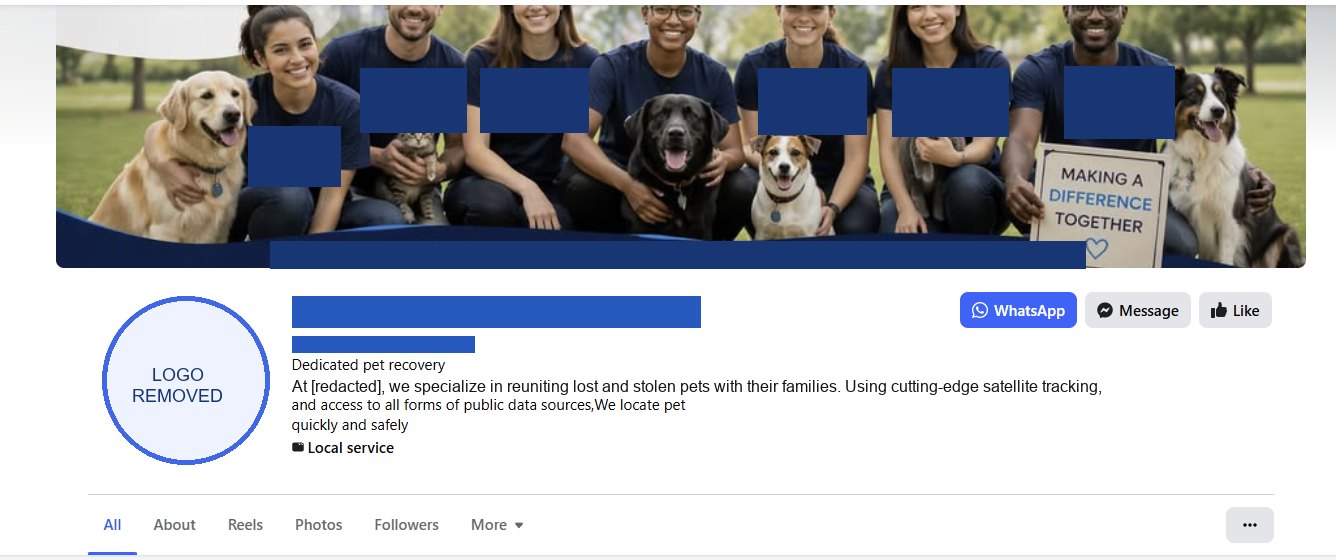
This is what those claims can look like. The identifying details are removed, but the pattern is the same: a normal-looking social page using satellite tracking language. - 100% success rate claim Nobody has a 100% success rate finding lost pets. Lost dogs and cats are hard to find, sightings can be wrong, terrain can be rough, and in Southern California there are coyotes and other natural predators. Any person or company promising guaranteed results is overselling it.
-
Fake AI photo or video proof
A newer scam is sending an AI image, edited photo, or even a fake video that looks enough like your dog to make you panic. Ask for a live video call or a current photo with something specific in the frame, like today's date written on paper next to the pet. Still do not pay before you see your pet.
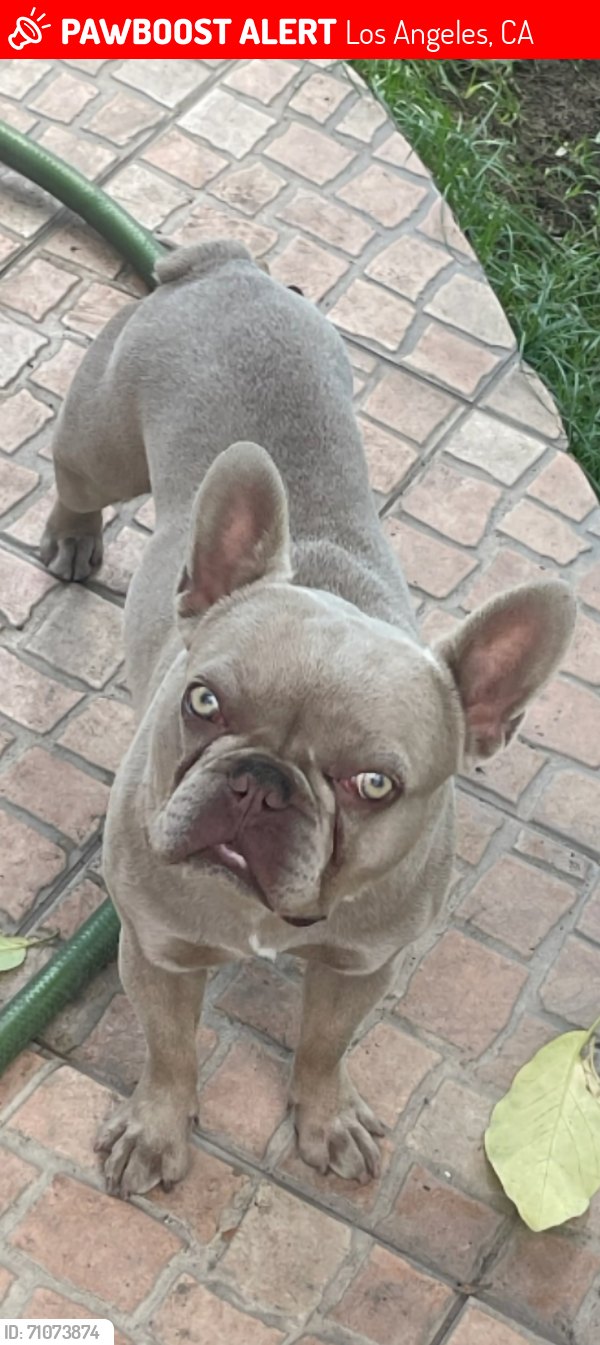
Real alert-style image. 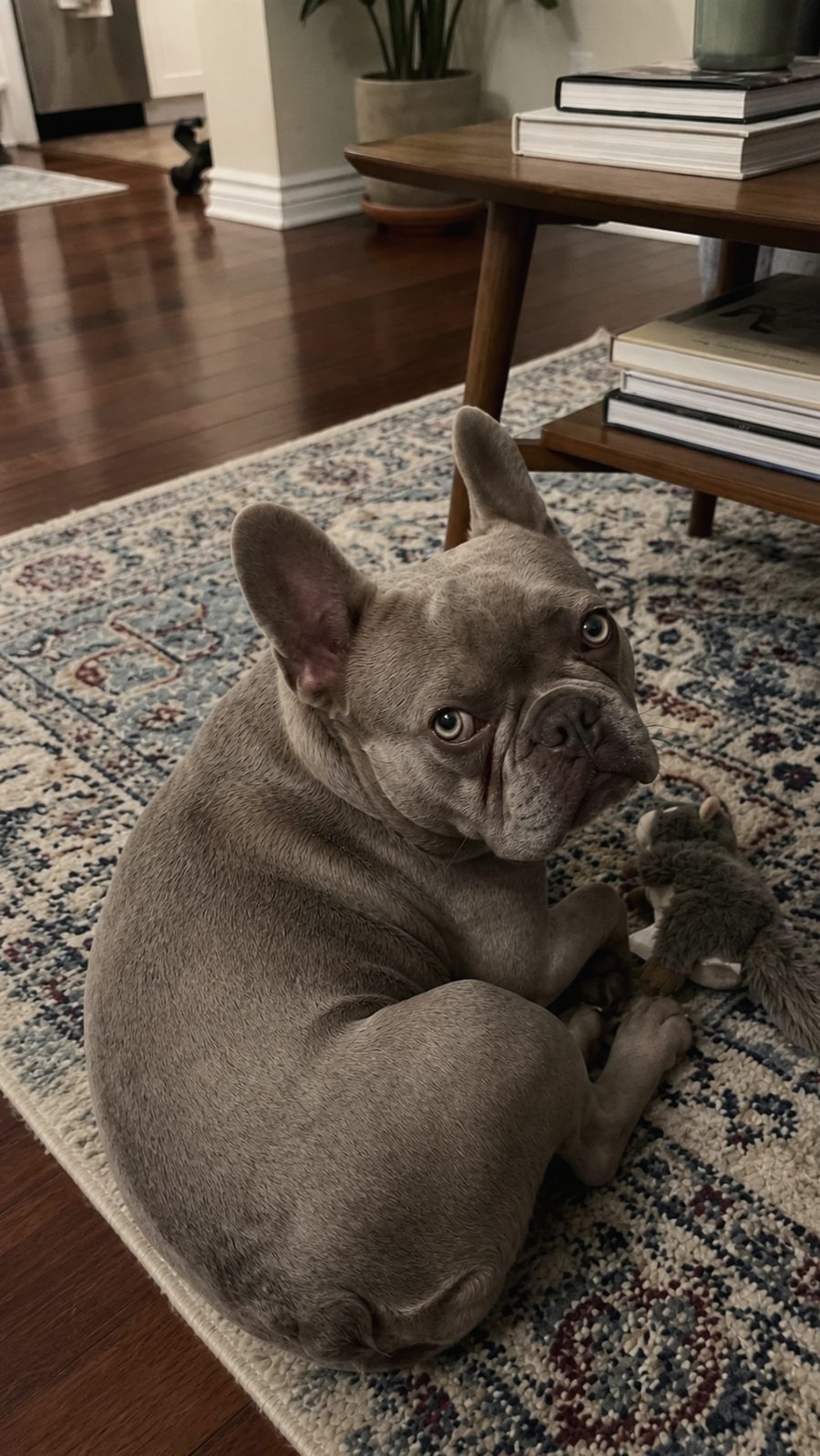
AI-generated example from a basic prompt. - Verification code scam Someone says they found your pet but needs a six-digit code to prove you are real. Do not send it. That code can be used to create or access an account tied to your phone number.
- Fake shelter, vet, or animal control call They claim your pet is injured and needs payment right now. Hang up, look up the official number yourself, and call the shelter or vet directly.
- Vague "I found your dog" text The message gives no location, no time, no photo, and no details. Ask where, when, and which direction the pet was moving. If they dodge basic questions, treat it as trash.
- Fake recovery service Be careful with anyone who refuses to explain the plan, pressures you to pay before they know the last known location, sightings, terrain, and timeline, or acts like one method works every time.
What to do instead
- Ask for exact location, time, and direction of travel.
- Save real sightings as map pins.
- Do not send verification codes.
- Do not send money, gift cards, crypto, Zelle, Venmo, Cash App, or Apple Cash before pickup.
- Do not pay someone just because they sent a photo or video. AI and edited proof can look convincing.
- Be skeptical of satellite search claims and guaranteed-success claims.
- If someone claims to be a shelter or vet, call the official number yourself.
- Screenshot suspicious messages before blocking or reporting them.
If the lead sounds real and your dog may be near open land, a wash, a hillside, a field, a trail system, or a large property, call or text 909 784 5240 and send the sighting details.