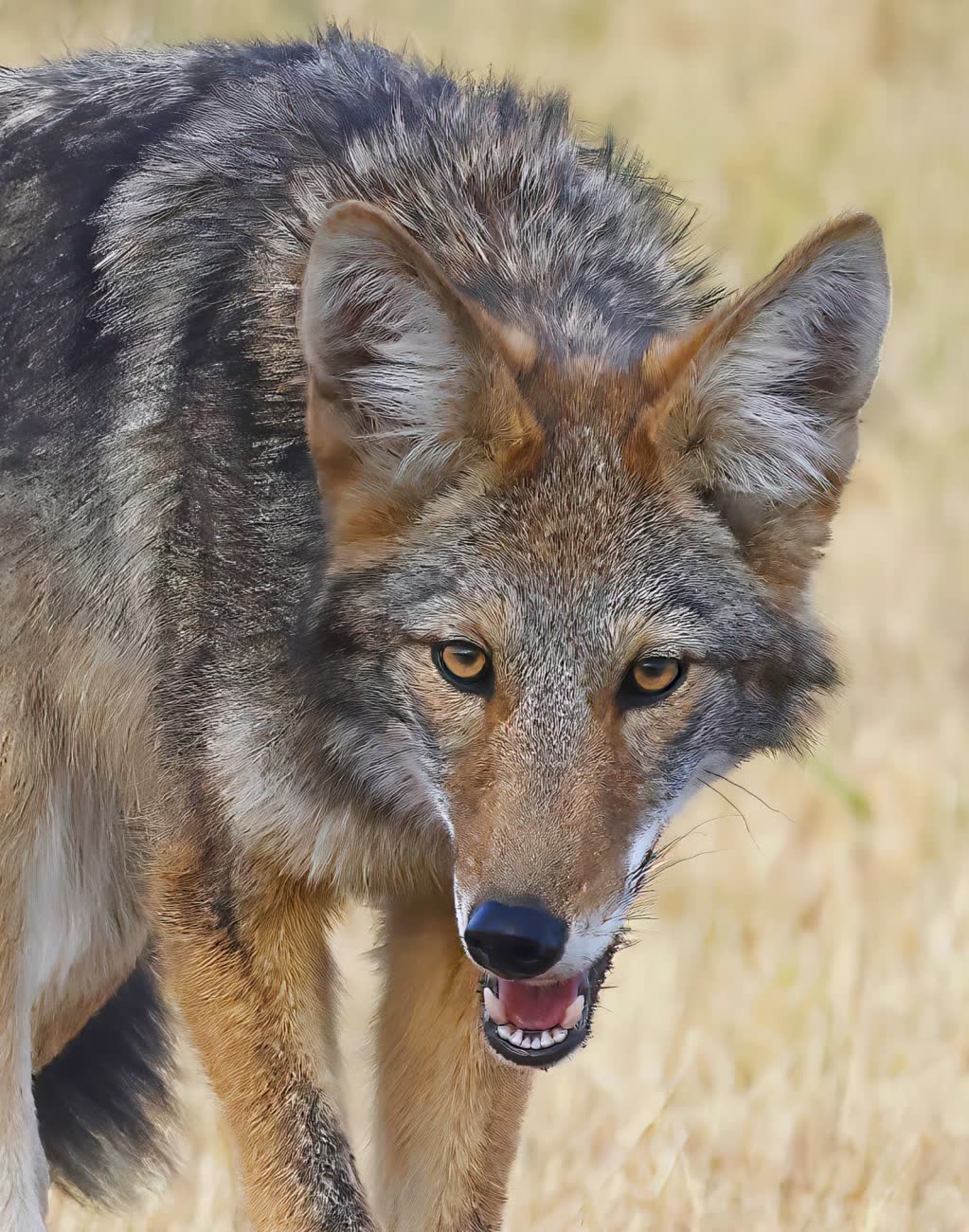
Coyotes are part of life here. That does not mean every missing pet was taken by a coyote, but it does mean the search plan has to be honest about risk, time, terrain, and the last good sighting.
Public domain photo by Lane Wintermute / USFWS. Not AI-generated and not stock photography.
Last updated June 21, 2026
Quick answer
If a pet is missing near open space, a wash, a golf course, foothills, a canyon, or a neighborhood with regular coyote sightings, coyote risk matters. It should change how urgently you search and how carefully you read sightings. It should not make you give up without evidence.
A lot of missing pets survive longer than people assume, especially if they have water, shade, places to hide, and are not injured. The hard part is that Southern California also has heat, traffic, predators, pools, cliffs, drains, and people who may pick up a pet and not report it right away.
How coyotes find animals
Coyotes do not need a wilderness area to move through. California Department of Fish and Wildlife describes them as native, highly adaptive animals that can live in rural, residential, and urban areas. UC IPM notes that coyotes can adapt to neighborhoods, parks, and open spaces when food, water, and shelter are available.
In a pet search, think in terms of edges and routes: trails, washes, fence lines, flood channels, brush lines, golf courses, drainage corridors, alleys, parks, and quiet streets near open space. Coyotes also respond to easy food sources. Pet food, trash, fallen fruit, outdoor cats, small dogs, chickens, rabbits, and water bowls can all make an area more attractive.
They use smell, sight, sound, and routine. If small pets are loose in the same yard, fed outside, or allowed to wander the same area every night, coyotes can learn that pattern.
Small dogs and cats are the highest risk
This is the part people do not like hearing: small pets can look like prey. CDFW specifically warns not to leave small pets unsupervised outside and to bring pets inside at night. UC IPM says coyotes in urban and suburban areas may prey on domestic pets like cats and small dogs.
That does not mean a coyote is the answer every time a small dog or cat disappears. Cats hide. Dogs get picked up. Pets get trapped in garages, yards, crawl spaces, sheds, and cars. A coyote is one possibility, not the only possibility.
How long can a lost animal survive here?
There is no honest single number. A healthy dog with access to water and shade can last much longer than a dog stuck in heat with no water. A scared indoor cat hiding near home may survive quietly for days, but a cat trapped without water or injured needs help fast. Puppies, seniors, flat-faced dogs, overweight dogs, medicated pets, and sick pets have less margin.
In Southern California, heat can become the emergency before hunger does. Cornell's veterinary guidance describes heatstroke as life-threatening and says risk rises with hot or humid conditions, lack of shade and water, and exercise in heat. If a missing dog is moving in the daytime heat, searching early, late, and at night may be safer and more productive than pushing people through hot terrain at noon.
The answer is to search urgently, but not assume the pet is dead just because a day or two passed. LA County Animal Care and Control tells owners to keep looking and notes that some well-meaning people may keep a found pet at home for weeks while trying to find the owner.
Do not guess based on fear
A coyote sighting near the last known area matters. So does fresh camera footage, tracks, hair, scat, blood, a collar, a harness, a reliable witness, or a confirmed attack. But fear is not evidence.
UC IPM points out that coyote damage is often judged from indirect evidence, and that coyotes also scavenge. That means remains or activity in an area do not automatically prove what happened. If the pet is still missing, the search should keep moving through the realistic possibilities until there is real information.
How coyote risk changes the search
Move faster near open space, washes, trails, golf courses, hillsides, and canyon edges.
Ask for security footage quickly, especially from dusk, night, and early morning.
Do not leave small dogs or cats outside as bait. That creates another emergency.
Use food, scent, and cameras carefully near the escape point when it is safe to do so.
Keep people from chasing a scared dog into traffic, brush, or a drainage area.
Report aggressive coyote behavior or bites to the proper local animal control agency.
Where a thermal drone can help
A thermal drone can help when there is an outdoor area that can actually be checked from above: open land, fields, hillsides, trail systems, washes, large lots, or canyon edges. It can also help rule out areas faster than people walking every piece of terrain.
It still has limits. Heavy tree cover, dense neighborhoods, patios, garages, sheds, and covered areas can hide animals from the air. If the best evidence points to a pet being inside a structure or picked up by a person, the search strategy should shift toward cameras, flyers, shelters, door knocking, and social posts.
How to reduce coyote risk before a pet goes missing
Keep cats indoors or in a fully enclosed outdoor space.
Keep small dogs supervised and leashed, especially at dawn, dusk, and night.
Do not leave pet food, trash, water bowls, fallen fruit, or birdseed accessible outside.
Do not let dogs run loose near known denning areas or open-space edges.
Secure side gates, low fence gaps, dog doors, and yard areas with heavy brush.
If a coyote approaches, keep pets close, back away slowly, make loud noise, and give the coyote a way to leave.
Call or text 909 784 5240. Send the last known location, the last confirmed sighting, the terrain nearby, any camera footage, and a clear photo. We will tell you if a thermal drone search makes sense or if another recovery step should come first.